
Black Pine has worked with Sam on various projects; most recently he planned the garden spaces at The Avenue Hotel / Glasshouse restaurant, and his early guidance was essential to the success of our wildflower garden.
Conversations with Sam tend to be expansive and leave you feeling enlightened and inspired, so we’re grateful he agreed to stop in to record some thoughts around our respective worlds — the intersection of landscape/garden design and architecture — and how they work together (or, perhaps, don’t…). Enjoy!
Note: Responses have been lightly edited for flow.
1. A design approach we love at Black Pine is around the idea that “buildings don’t stop at the walls.” From a landscape designer’s perspective, where does architecture end and the garden begin—or is that the wrong way to think about it?
Maybe it is the wrong way to think about it! I recently spoke to someone who said they were thinking of buildings in terms of terrain. This approach then lends itself to things like green roofs and vertical gardens, not just your stereotypical landscaping zones. These spaces can be interspersed with plants, because plants will grow anywhere. You can have vertical or horizontal spaces with very little of what we would recognise as soil and yet plants will grow there. Apart from the polar extremes — something will grow in any situation.
A great example is the vertical garden in the Durie Hill Elevator [pictured below], where you’ve got a hundred metre long tunnel under a hill and there are still plants growing there. That’s probably as close to pure architecture as you can get while still having plants amongst it. So, if you’re looking at landscape design being inherently connected to plants, there’s really no limit to where one should stop and another should start.
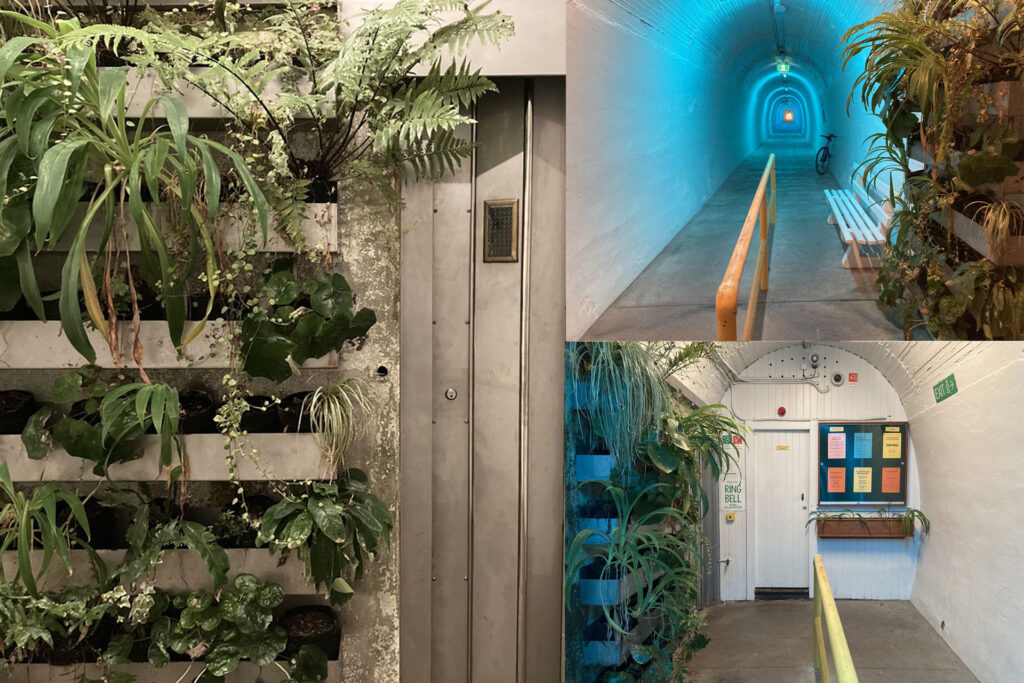
“Plants will grow anywhere.” Case in point: the depths of the Durie Hill Elevator tunnel.
2. Many homeowners treat the garden as something to tackle after the build is complete. What are the missed opportunities in not considering landscape design from the very beginning?
In many ways gardens are inherently connected to time, so thinking about a garden after you’ve built the building is basically a huge loss of time. If you can plant something at the same time as you get builders on site — it might not be the plantings in and around the house, but maybe it’s boundary plantings or shelter in a bare paddock — then you might gain 18 months or two years’ worth of growth, depending on how long the build takes.
There’s also this thing of people forgetting about gardens and the budget that’s required. Often a garden is an afterthought and has a budget to match. Yet when you drive up to your home, what’s the first thing most people see? It’s very often the landscaping. Even if it’s largely unnoticed, the lead-up from the driveway or path to the front door usually includes plants in some way.
The other thing that’s really important during a build is soil. Often people begin a build by digging out the foundations and so the topsoil gets scraped off and taken off site. Then, to put the gardens in place later, they’ll bring in new topsoil. If we relate that back to lost time, good topsoil can take up to 50 years or more to form. So, if you take that existing 50 years’ worth of topsoil off site and expect to replace it with something else, you’re probably mistaken and you’ve probably created some amount of unnecessary work. It’s time that you’ve undermined when there’s already a huge resource that you’ve got on your property from the outset.
3. Construction can be tough on a site, particularly in terms of soil health and structure. How can early landscape planning help protect or enhance these natural systems?
Helen Elks-Smith in the UK wrote a while ago about protecting the soils to the extent where areas [of a construction site] are marked off and people are not allowed to go — you can’t park vans there, you can’t dump rubbish there, it’s basically just cordoned off for the whole of the build in order to protect the soil.
The soil is so often forgotten about because it’s just under people’s feet and not seen, but there’s a huge amount of life there; mycelium networks, micro bacteria, whole living entities that tend to get scraped off to put in foundations, or just thrown out.
And when you have things like concrete runoff, or people washing out paint buckets or plaster, that’s damaging the soil and your potential ability to grow healthy plants. Damaged soil takes a long time to recover, and it means you’re not only trying to grow a garden, but also doing remediation work to improve the soil that you’ve, potentially, needlessly disrupted or destroyed.
“The landscape project, unlike the architectural project, is never really finished”
4. A building can be completed in months, but a garden can take years to fully mature. How should that difference in timeframe influence the way clients and designers approach a project?
If you’re looking at it just being a landscaping project, it’s worth bearing in mind that it’s probably never going to be finished!
A garden is not like a building. You might plant a whole bunch of trees and then under-plant them and, in the first five years, everything will be fine. But all the time the canopy is increasing, which affects the amount of water and sunlight available to that understorey. So, you might then have to go in and change your planting underneath the trees to be more shade tolerant. And you might have to do that again because after 15 or 20 years the tree might die or get damaged in a storm and you’re left with a big open space where light floods in and all those shade-loving plants can no longer survive!
The landscape project, unlike the architectural project, is never really finished, and I think that’s a very pertinent point to remember — landscape design starts once the garden has been planted.
5. In your experience, how can thoughtful planting design—particularly the use of natives or layered planting—reduce long-term maintenance while still delivering a rich, engaging landscape?
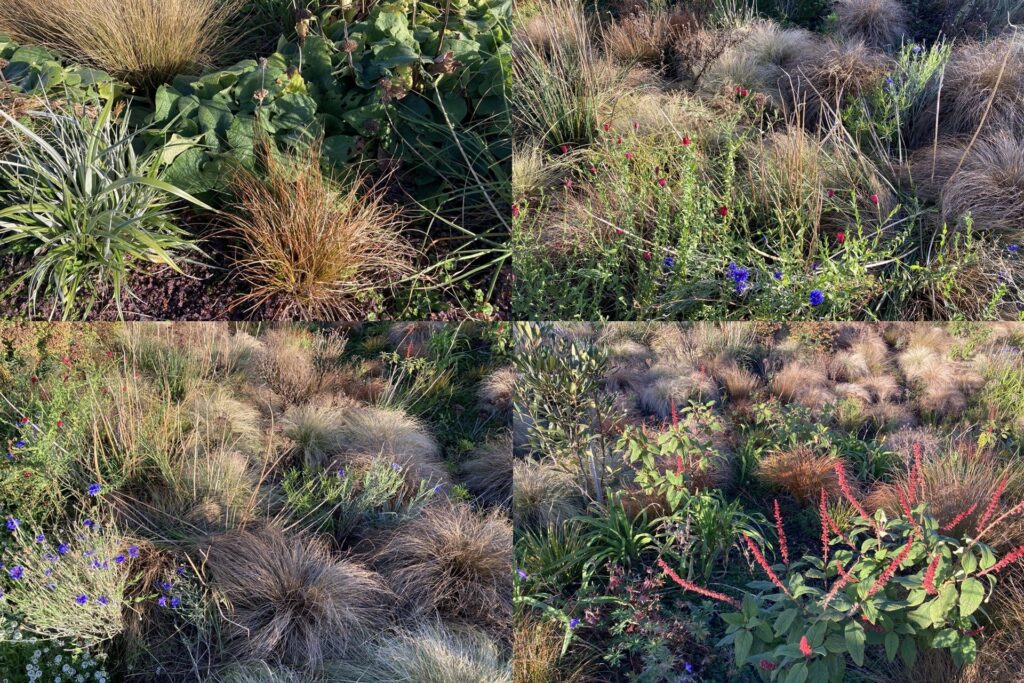
They’re inseparable, really. A lot of the problems you see around public gardens and commercial spaces — and this often feeds into residential gardens — is that gardens are underplanted, so their maintenance often gets reduced to chemicals and machinery. There isn’t enough relying on plants to do the work for you, when they’ve spent millennia evolving to fit that purpose. You can use hierarchical layering – let’s say some ground cover, grasses and perennials, then shrubs above that, then your trees above that – to create an environment that basically prevents weeds. A friend of mine says that a lot of weeds are only there for the sun, so as soon as you take that away they’re not going to want to grow.
A lot of weeds are just there to protect their food source, which is the soil, so once you have that covered, they’ll die back. Mulch is great for that, but why would you just want to look at bark when you can look at layers of plants and flowers and have colour?
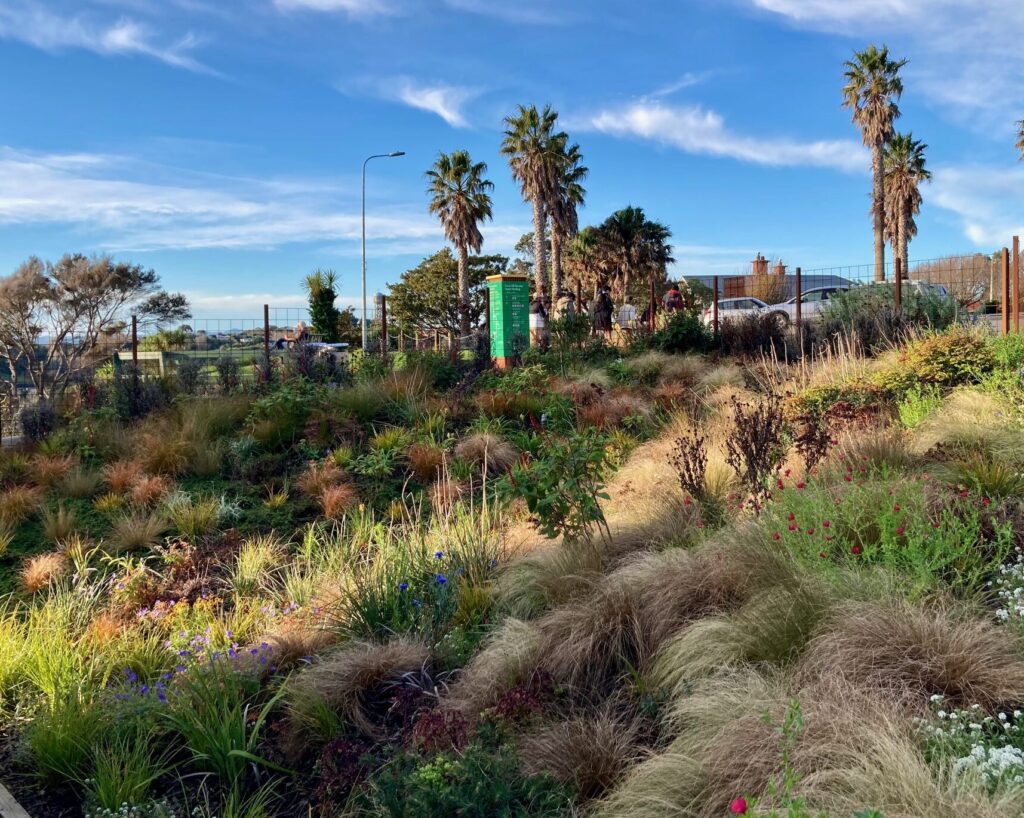
“Why would you just want to look at bark when you can look at layers of plants and flowers and have colour?”
6. What are some simple but impactful ways architecture and landscape can work together to improve everyday living—things people might not notice immediately, but would definitely feel over time?
I think one thing that would make a big difference over time would be the creation of shade. And that’s not just shade to sit under, because when you have bigger plants and bigger trees, they’ll actually lower the surrounding ambient temperature. Without getting into the technical stuff, when it’s hot plants essentially sweat a little bit and that water vapour helps reduce the ambient temperature. Having bigger plants also helps protect from wind. These are positive long-term benefits they can make to your quality of life.
You know, people go and visit established gardens because they like to be in amongst plants. I find it quite strange when people buy a section, especially big lifestyle blocks, and they’ll build a lovely house but leave it at that. It kind of looks to me like a pimple on a hill, because it doesn’t have any context around it, there’s nowhere for it to hide, there’s no landscape for it to nestle into.
I feel like, given where we are in history and the state of the planet, if you have a bit of land, even if it’s a small residential garden, you have an obligation to plant a tree or some shrubs. I feel a bit brutal saying it, but there is a long-term benefit there!
7. For homeowners at the very start of their journey, what’s one shift in thinking that would lead to better integration between their house design and their outdoor spaces?
Designing them in tandem is pretty much the long and short of it! If people want true indoor-outdoor flow, you need to be designing the garden at the same time as the house, and vice versa.
There’s all those benefits we’ve discussed about soil health and not wasting the resources you already have on your property, but that can extend further. Like, if you’re doing a renovation, think about reusing things like bricks and concrete blocks in the garden. Sure, there might be a little bit of labour involved in tidying up some of those materials, but when you compare it to the cost and the energy that’s spent producing new materials for new builds, it’s significant.
As I said before, what we recognize as soil isn’t the only place plants will grow. A lot of research and practice is being done into different substrates at the moment. More and more crushed concrete is being specified for garden use. So get yourself a contractor with access to a concrete crusher and make use of that old livestock yard or shed pad.
Garden planning should be done hand in hand [with building design] and not treated as an afterthought. The reality is the plants you put in will probably outlive the house, so don’t overlook their impact!
Follow Sam on Instagram at @sammooregardendesign