Ahead of the 2026 New Zealand general election, Black Pine invited all candidates standing in our home electorate of Whanganui to answer three quick questions exploring the role of architecture in our region. Responses were received from the Labour Party’s Angela Roberts, Carl Bates representing National, and Sandra Kyle of the Animal Justice Party. We greatly appreciate the candidates taking time to answer the questions.
Note: To avoid implied preference, candidate responses have been published alphabetically.
1. What role do you believe architecture and urban design should play in shaping the future of the Whanganui electorate?
Angela Roberts: Those skilled in architecture and urban design fundamentally help communities realise their aspirations for how they connect, live, and thrive. Bringing their practical and strategic skills and design lens to the process of building collective spaces is important. They help to connect a range of voices, find shared values, and support an effective collaboration process as we shape our future. They help us to consider how we embed our values into design: How do we best respond to our local context, in particular taking advantage of our landscapes, our natural resources and people in a way that is sustainable and inclusive over generations? How do we ensure that our diverse communities, across a range of geographical and economic contexts, are connected in a coherent way? How to we balance practicality with beauty to ensure both function and joy are delivered?
Such collaboration is time consuming and messy but inevitably takes us to new and exciting places. I have learned, through the years of participating in the Just Transition project in Taranaki, that there are exciting opportunities that arise as we are forced to be deliberate in how we build resilient communities in the face of challenges such as climate change. We need those who are shaping our urban design and architecture to know the particular challenges and aspirations of our communities and plan and build the physical environment to respond effectively to them. They must focus on helping to make the voices and the dreams of our community become a lived reality.
Finally, it goes without saying that in Whanganui this process must, of course, be Te Tiriti-led.
Carl Bates: Architecture is one of the ways we express the heart of our community. It helps tell the story of who we are, what we value, and the confidence we have in our future. Good architecture and urban design are about creating places where people want to spend time, where businesses want to invest, and where communities feel connected. Sometimes that is through the design of a building, and sometimes it is through smaller touches that bring life and personality to a space. Painting the basketball court in Castlecliff is a good example of transforming a simple public space into something colourful, welcoming and uniquely local.
Across the electorate, from Whanganui itself through to Pātea, Waverley, Hāwera, Stratford, Eltham and our Ruapehu communities, good design can strengthen local identity while supporting opportunity and growth. The best places are those that remain true to themselves while adapting to the needs of future generations.
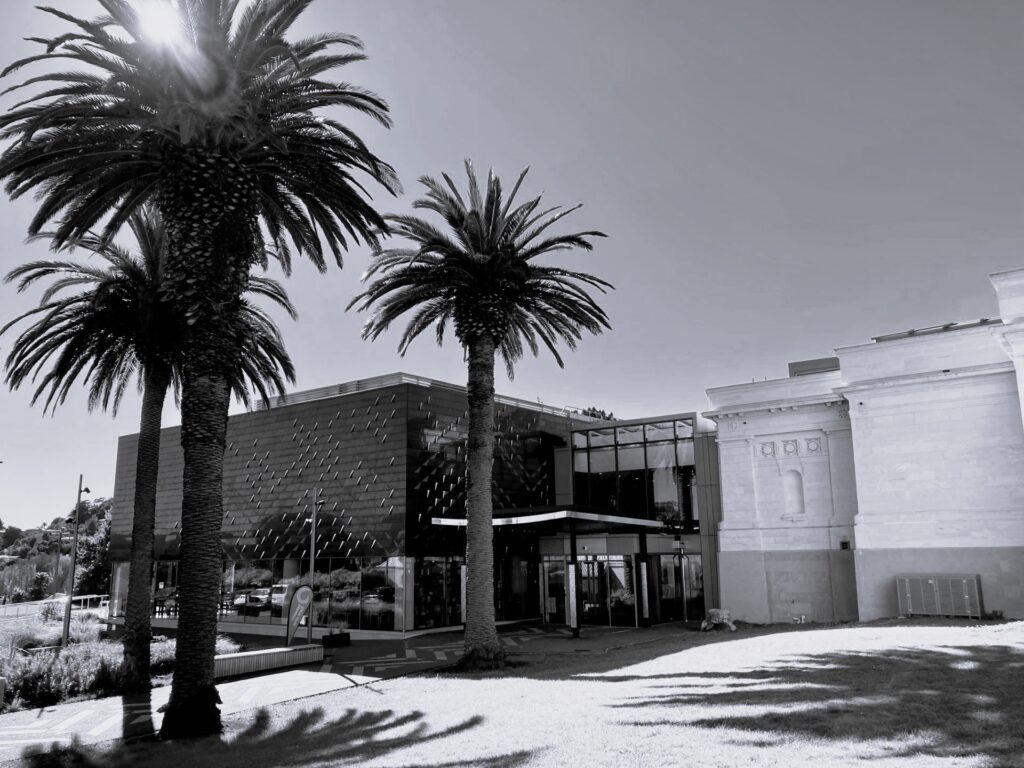
One of the many things I admire about Whanganui is that we have shown it is possible to achieve preservation and progress at the same time. The Sarjeant Gallery [pictured below] is a wonderful example of heritage architecture working alongside contemporary design, with the original building and modern extension complementing one another to create something neither could achieve alone.
Sandra Kyle: It has an important role to play. I have always known that the environment helps to shape the people who live in it. I am proud that Whanganui, with its well-preserved historic buildings, its distinctive features such as the Durie Hill elevator, and now the Te Araroa trail bridge over the Whangaehu river – as well as its relatively large population of artists and artisans – is recognised internationally as the only UNESCO creative city of design in New Zealand. Even among other cities of design around the world, we are set apart. We have Te Awa Tupua, with its status as the first river to be recognised in law as a legal person, demonstrating the indigenous thinking that regards the environment as a living ancestor rather than a resource.
I first understood how urban design shapes daily behaviour a few decades ago. Before then I just thought that buildings were buildings, and didn’t give them much thought. But I came to understand that urban design shapes daily behaviour, makes a centre safe, easy, and pleasant to live in, and in so doing connects the community physically and emotionally.
In the future, I would like to see our city complement our beautiful heritage buildings with modern, beautiful, innovative design. I would love to see more rooftop gardens, and every workplace more animal-friendly.
2. What is one building, public space, or development project within the Whanganui electorate that you believe demonstrates a positive vision for the future – and what lessons should we learn from it?
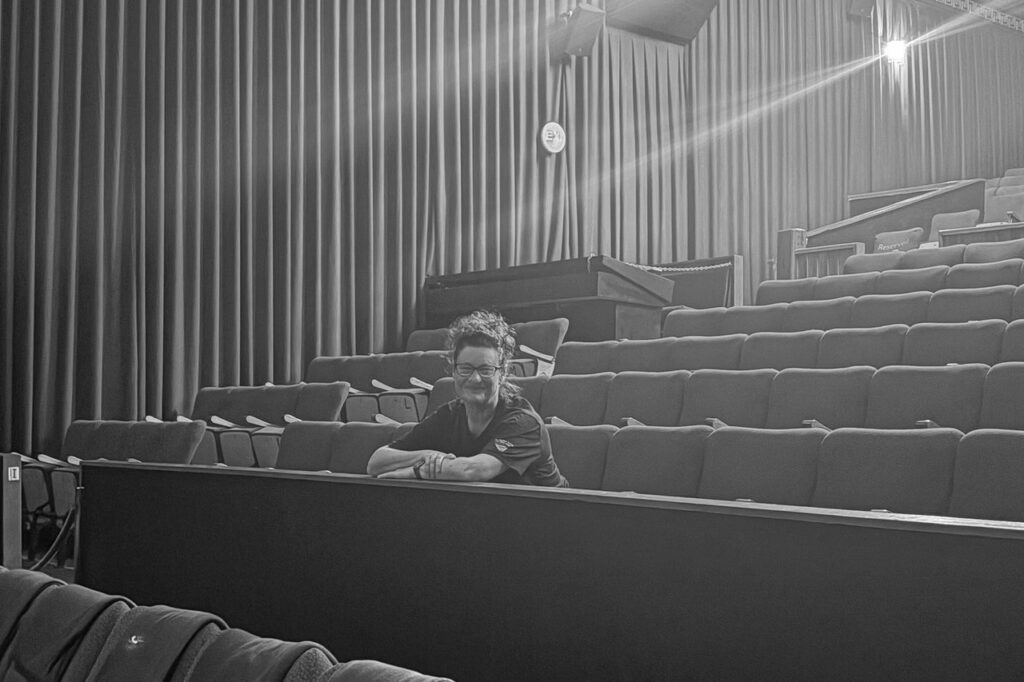
AR: The King’s Theatre in Stratford [pictured above; image supplied] is all three. It is a building, a public space, and a development project. This Category 2 listed building opened as a cinema in 1919 and is the birthplace of the ‘talkies’ in the Southern Hemisphere. As a member of the Stratford arts community, this theatre has become very important to me over the decades, whether in the audience, on the stage or as a teacher of the arts.
It is wonderful have a space where my students can learn and be creative, get excited, and ultimately thrive as they immerse themselves in the world of movies and theatre. They have explored Shakespeare, run the tech, and cheered on their classmates. It is also special as a place where we can bring the world to them. My students have been able to see Sir Ian McKellan performing Shakespeare and Michael Hurst performing his plays that have toured the world. It’s a functional and aspirational space.
Why shouldn’t small towns have nice things? It’s important for young people in provincial New Zealand to know that they can, and deserve to, have access to such spaces. That they don’t have to live in major metropolitan areas to have such wonderful experiences. That they can be in small town New Zealand and have the world brought to their door, or take their art to the world, without leaving home.
I think that there is a lesson from this theatre when we consider it as a development project. When a community makes the deliberate decision to take responsibility for the preservation and development of a building, magic can happen. When we see them raise money for a new roof, restore stain glass windows, or fix up the green room, we know that it is because the community understands the importance of intervening now. It represents how ambitious we can be as a small community. That when we understand our ‘why’ and we bring all our skills to the table and collaborate in the design, creation and restoration of buildings, we can ensure that they are beloved and at the heart of the creation of beautiful memories for another 110 years.
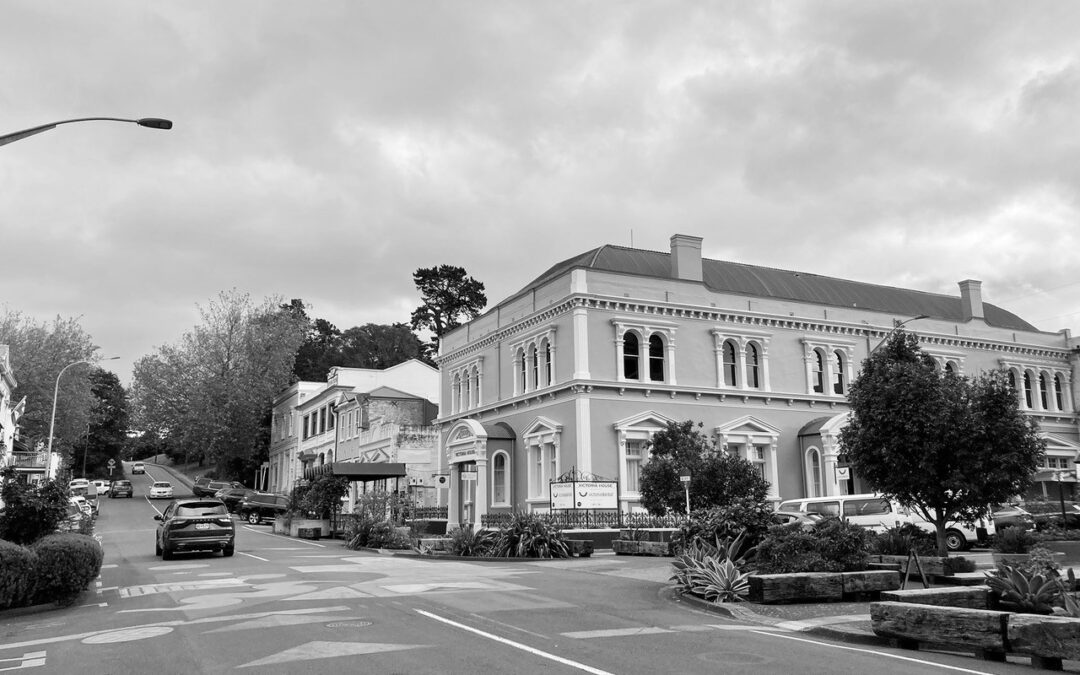
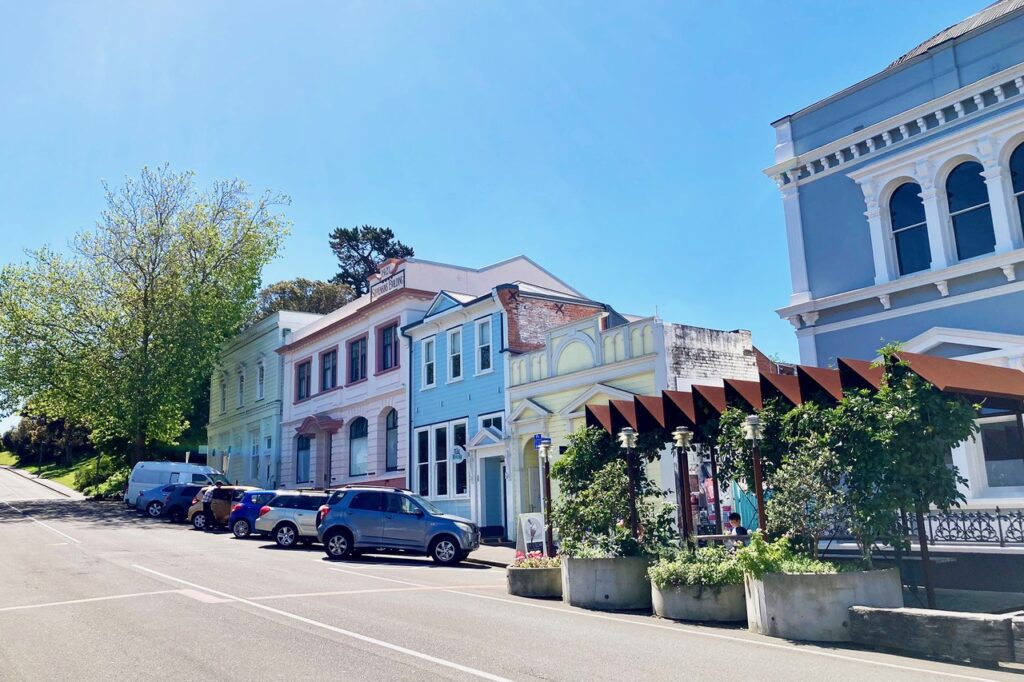
CB: Few places illustrate Whanganui’s potential better than Drews Avenue [pictured below, and at top]. What I find most encouraging about its transformation is that it has not been driven by a single large project. Over time Drews Avenue has become a place where you can grab an ice cream with the kids, meet with a financial adviser, walk through and grab a coffee on the way to work or UCOL, or celebrate a special occasion over a cocktail. Its mix of activity creates energy, draws people in, and gives the area a genuine sense of place.
What stands out to me is the vision shared by the people who have invested there. They have established their businesses and organisations, and adapted heritage buildings for modern uses while retaining the character that makes them special. They have achieved a great deal already, but they are also continuing to think about what more the area can become. That sense of collective ambition has helped create something that feels authentic and distinctly Whanganui.
SK: I’d choose the redevelopment of the Sarjeant Gallery on Pukenamu Queens Park. It’s a good example of a co-design with iwi input. I love that it incorporates the 1919 neoclassical building, now earthquake strengethened, with a modern design, blending the old and the new as one gallery. The Māori name Te Whare o Rehua Sarjeant Gallery showcases this blend, reflecting both its place in a Māori worldview as well as respecting colonial-era heritage.
3. Looking ahead 20 years, what do you hope future generations will thank us for when they look at the towns, communities, and landscapes of the Whanganui electorate?
AR: I hope that future generations see that we have been honest enough about the future that we are sending them into. That they know that have we have done all that we can to ensure that they will able to be resilient and live inclusively, sustainably and prosperously.
I hope that they feel seen. That the future was designed, properly resourced and created, not for this generation currently doing the mahi, but for them. That they will know that because these spaces will work for them. They will hopefully be thankful that we have turned the dream of a circular, decarbonised future into a simple reality.
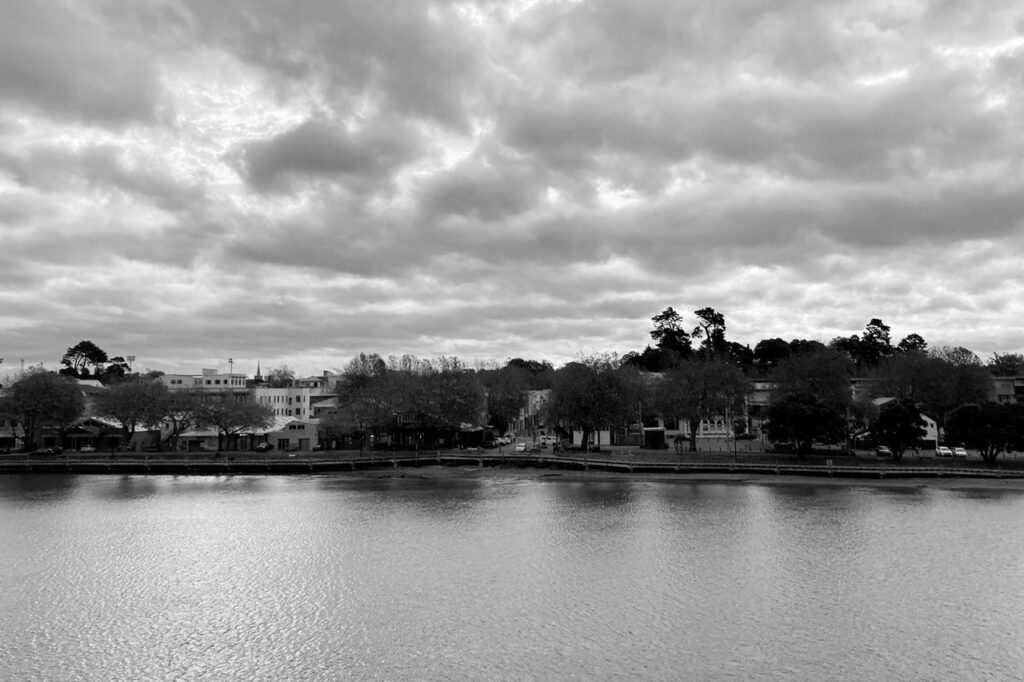
CB: I hope they see an electorate that understood the value of its own identity. For Whanganui, that means a city that fully embraced its relationship with the awa. The river has always been central to our story, and I hope future generations see a riverfront that is active, welcoming and woven into everyday life, with public spaces, hospitality, recreation, business and gathering places that strengthen the connection between people and the water. Great spaces do more than attract visitors. They create pride, bring communities together, and reinforce a sense of place.
Across the rest of the electorate, I hope people see towns that continued to build on the revitalisation already underway. Projects like Te Ramanui o Ruapūtahanga in Hāwera, the new library, and heritage restorations such as the beautifully renovated chemist shop on High Street show how thoughtful investment can strengthen local identity while preparing communities for the future. A key part of that future will be bringing heritage buildings back to life. From the Chateau to the historic buildings that define many of our town centres, restoring and repurposing these places preserves a connection to our history while creating opportunities for business, accommodation, community use and tourism.
Most of all, I hope future generations thank us because we refused to choose between heritage and progress. We protected what made our communities special while creating the opportunities, spaces and infrastructure that allowed them to thrive.
SK: Twenty years from now, I hope we will see changes in urban design, farms and landscapes, that stop ignoring animals, but keep their rights and well-being in mind also. I hope our streets, parks and public spaces make room for other species: for example, road crossings, green corridors, and bird-friendly lighting and building design. I hope pigeons and other denizens of our city stop being treated as pests and cruelly poisoned. Instead I would love them to be celebrated for the marvellous, intelligent, sentient beings that they are, with as much right to live here as we have.
Just as Te Awa Tupua has been recognised as a living being, I hope we give the same rights to the creatures that depend on it. That means a clean, healthy river that supports the life within it, restored wetlands and native bush, rewilding, and a countryside where wildlife is welcomed back instead of pushed out. I would love to see our wonderful and innovative little city be a world leader in the way it co exists, and respects the rights of, all species, not just human species. I hope that in twenty years from now we will be a more compassionate city than we currently are.